Dashboards·terminal · desktop·MIT
taxi-meter
Korean taxi meter above the prompt: session cost at API prices, per-request fare, limits.
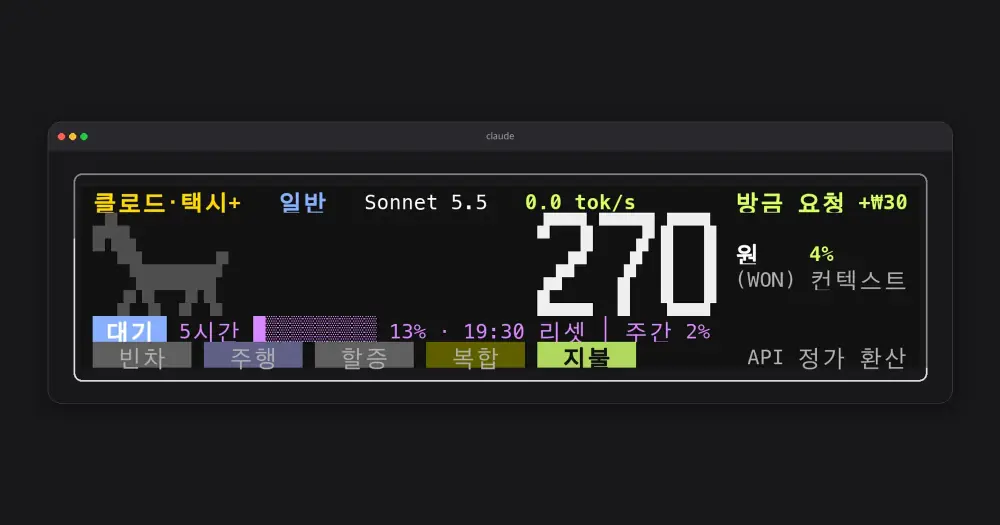
taxi-meter turns a Claude Code session into a taxi ride: a meter panel above the prompt counts the fare up in won while Claude works. The fare is what the session would cost at API list prices, so on a Pro or Max plan it shows how much work your subscription does, not what you are billed. The panel, the commands’ output and the README are all in Korean.
What it does
- The fare. A large LED number with the session total, which only goes up during a session. The top line adds the last request’s share (
방금 요청 +₩30, “just now”)./clearstarts a new ride at zero, and so does reopening a session with--continue. - The car. The top line also shows the car class, the model name and the output speed in tokens per second; the right side shows how full the context is. Sonnet and Haiku ride as
일반(standard), Opus as모범(deluxe) and Fable as블랙(black). - Five keys, as on a real meter: vacant before the first answer, driving while Claude answers,
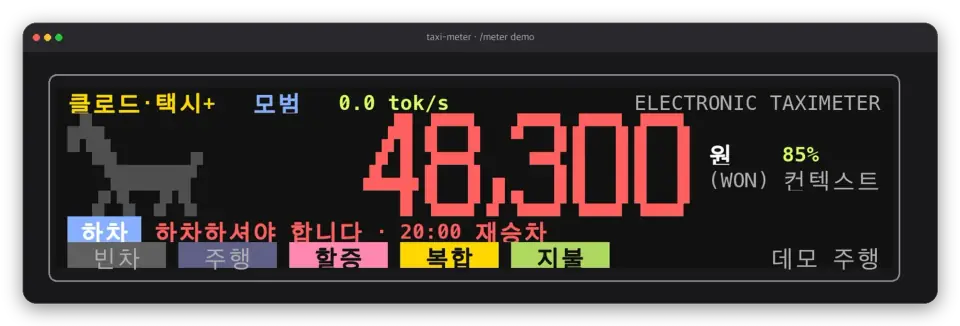
할증(surcharge) on the two pricier classes,복합once the context passes 50% (a long haul), and pay when a request’s fare is settled or a limit runs out. - Limits. The bottom line shows the five-hour limit with a bar and its reset time, the weekly limit, and a credit limit if your account has one. Past 90% the meter says you are near your destination; at 100% the digits turn red and it tells you to get out, with the time you can board again.
- Model switches. After
/model, the car class changes at once. The new model cannot reuse the old cache, so the next request writes the whole conversation to cache again; a toast warns you of that surcharge in won before you send it. - Sounds. A click each time the fare passes another ₩1,000 and a chime at 90% and 100% of a limit.
Commands:
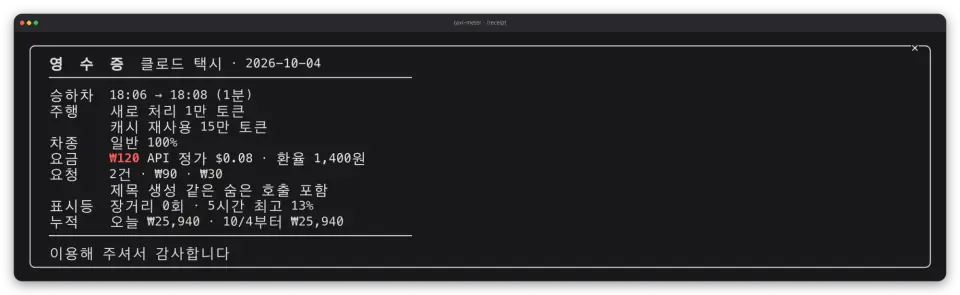
/meterprints this ride, the last request, today, the last seven days and the total since the ledger started, with the dollar figure and the exchange rate./receiptopens a receipt pane: boarding and drop-off times, fresh and cache-reused tokens, the share of each car class, the fare, the last five requests and the running totals./meter resetsets the meter and the ledger back to zero./meter demoplays a staged ride of about ten seconds, marked as a demo, for screenshots. Your next prompt ends it.
Install
Needs Claude Code 2.1.287 or later. The sounds play only on macOS.
claude plugin marketplace add devbrother2024/devbrothers-mods
claude plugin install taxi-meter@devbrothers-mods
Run /reload-plugins or restart Claude Code and the meter appears above the prompt. In /config you can set krw_per_usd (the exchange rate, 1400 by default), style (led for the panel, compact for one line), sound and tick_won (won per click). taxi-meter is one of four mods in the author’s taxi pack, all in the same marketplace and installable one by one.
How it works
The meter does not count tokens to price them. It follows the session cost Claude Code already calculates, the same figure /cost shows, reading it after every model step and every usage update and adding each increase to the fare. The dollar amount is converted at krw_per_usd and rounded to 10 won. The author checked it against a real session: the responses in the transcript at list price, plus the calls that never reach the transcript (session titles, prompt suggestions), matched to the seventh decimal place.
Those hidden calls are part of the fare, and one that runs after a turn ends can land in the next request’s figure, while the session total stays right. If you do not use prompt suggestions, "promptSuggestionEnabled": false in settings.json turns that call off.
The receipt’s token counts come from the usage of each model step. Every request reads the whole conversation back from cache, so in a long session most tokens are cache reads, which cost a tenth of the input price.
A ledger of daily totals, kept for 90 days in Claude Code’s plugin store, feeds the today, seven-day and running figures. The module does not read your prompts or tool calls, makes no network calls, starts no processes, writes no files and costs no tokens; the README points to the calls: line of claude plugin validate to check that for the whole pack.
Limitations
- The LED panel needs a terminal at least 75 columns wide and 9 rows tall. Below that, or with
styleset tocompact, the meter is a single line. The author documents that single text line in the Claude Desktop Code tab too, which cannot draw the LED digits, and no display in the VS Code extension chat,claude -por the Agent SDK. - The labels are in Korean and the fare is in won; dollars appear only in
/meterand on the receipt. /receiptdocks on the right in fullscreen mode ("tui": "fullscreen") with a terminal 110 columns or wider; otherwise it opens above the prompt.- With all four taxi mods on, the pack needs about 18 rows above the prompt. Fullscreen mode caps that area at half the terminal height, so in a short window the bottom folds into
n more; the author suggests 50 rows or more. - Built and tested on Claude Code 2.1.289. The author notes that the mods API may change between releases.
Similar Claude Mods
bw-peek
Open a Beadwork ticket in a pane beside the transcript from a button under the reply.
token-weather-usage
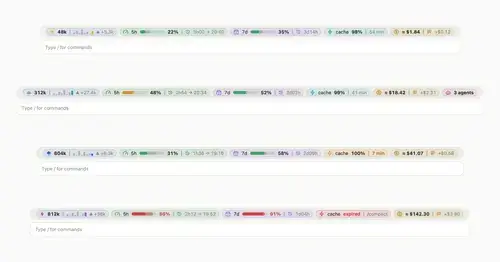
Context, 5-hour and 7-day limits, cache countdown and cost on one line above the prompt.
savvy-progress
Running, finished and planned subagents with model, context, cost and time, in one panel.
claude-code-usage-quota
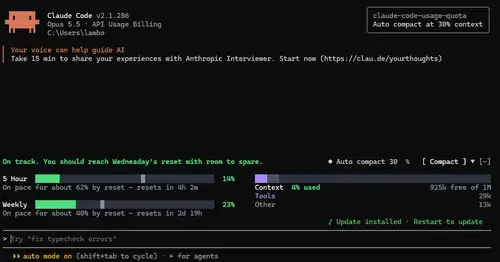
5-hour and weekly plan limits, a run-out forecast and the context, with auto compact.
Popular Claude Mods
The whole directory →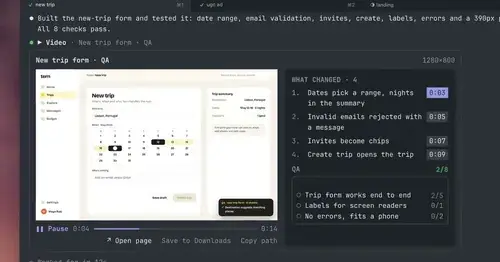
show-your-work
Claude shows screenshots and recorded Playwright runs in the chat, with before/after QA.
cc-stretch
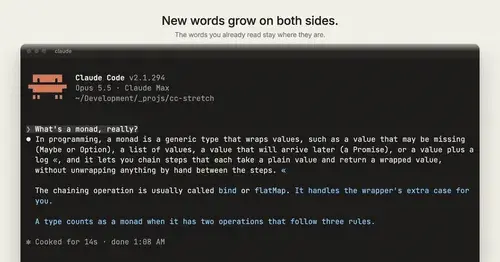
Replies arrive short; click a phrase and it grows in place, click « to fold it back.

claude-latex
TeX math, TikZ diagrams and LaTeX blocks typeset in Claude's replies, in the desktop app.
statusline-anywhere
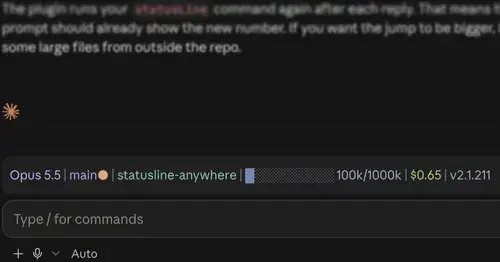
Your Claude Code status line, drawn above the prompt in the Claude Desktop app.