Context & memory·terminal·no license file
commonplace
Your notes as a wiki Claude maintains: ingest papers, ask questions, keep it healthy.
commonplace turns a folder of Markdown notes into a knowledge base that Claude maintains for you: papers you share become structured notes, research questions get answered with links back into what you already wrote, and the vault gets linted and repaired. It is aimed at Obsidian vaults, but the author says any folder of [[wikilink]] Markdown works. Most of the plugin is skills and shell hooks; the function-hooks module adds what has to run inside the engine.
What it does
The skills trigger from ordinary conversation, with no slash commands:
- Ingest and analyse. Share a paper, article, arXiv ID or URL and wiki-ingest writes a source note, concept stubs and map-of-content links. paper-analyzer does the deep read, with PDF text extracted locally.
- Ask. wiki-query answers from the vault with wikilinks and files new connections back in.
- Maintain. A read-only health report, a score-gated fix loop, stub compilation, retiring notes replaced by newer ones, domain management, and semantic linking through local Ollama embeddings.
The mod itself, the register.ts module, does five things:
- Two tools. Registers
vault_searchandvault_note, which read the vault’s indexes and notes so Claude and its subagents can look things up without grepping. - Ambient connections. After an answer is on screen, checks whether it touches something you already wrote. If a model call judges the link real, one line appears under the answer. The
ambientConnectionssetting turns this off. - Guards. Refuses Bash commands that break two of the vault’s own rules, and refuses a Write or Edit into a code repository that carries names from the vault’s private domains.
- Context. One block per conversation with the vault’s location and, inside it, its size and index layout. The vault path is also prepended to every wiki-* skill, and general-purpose subagents sent to research the vault are steered towards the two tools.
- A status line. One dim line above the prompt, such as
vault · 12 sources · 40 concepts · 1 surfaced, after a turn in which the vault did something. It clears the moment you type: a receipt, not a dashboard.
Install
Needs Claude Code 2.1.287 or later, Node.js and a folder of Markdown notes. Ollama only for wiki-deep-link.
git clone https://github.com/noopz/commonplace
cd commonplace
npm install
npx tsx scripts/init.ts --vault /path/to/your/vault
There is no marketplace, and the README does not say how to load the plugin after init. The author’s hook comments assume --plugin-dir, so start Claude Code from your vault with claude --plugin-dir /path/to/commonplace. A SessionStart shell hook runs npm install --production if node_modules is missing. Then chat: share a paper, or ask how the vault is doing.
Where mods are turned off, the module stays inert and the shell hooks in hooks.json carry the plugin alone, minus the tools, the ambient line and the status line.
How it works
Everything lives in your vault: notes as Markdown, originals under raw/, and .wiki/ with the JSONL indexes, conventions.json, a marker that tells the shell hooks to stand down while the module is loaded, and hook-log.jsonl, a trace of every guard decision and connection pass, trimmed to 2,000 lines at session start. The plugin store keeps the ambient pass’s rate-limit bookkeeping.
The module makes no network calls of its own: every read is a local cat or a run of the plugin’s CLI, and PDF extraction is local. The ingest skill works from the papers and URLs you hand it in chat.
On tokens, the README describes three tiers: scripts for indexing and linting at zero LLM cost, Haiku agents for mechanical fixes, the main model for analysis and answers. The module adds one context block per conversation (a paragraph in any repository once a vault is configured, a short briefing inside the vault) and, on rate-limited turns, one classify and one small completion for the ambient line, after the answer is on screen. Every Write or Edit inside the vault triggers a reindex whose notes come back to Claude as tool context.
Limitations
- The README does not document how to load the plugin into Claude Code after
init. - The outside-vault context paragraph goes into every conversation in every repository once a vault is configured; the author calls it an accepted trade.
- The shell
agent-guardstill denies vault-shaped Agent dispatches even with the steering hook live, soALLOW_VAULT_AGENTcan still be needed. - The Bash guard is global, so the author keeps it conservative: a false positive blocks work in an unrelated repository.
- The hooks shell out to
cat,tee,tailandwc; the author says nothing about Windows. - The status line draws only in interactive sessions; the author documents the terminal.
Similar Claude Mods
storybloq
A board of the tickets and issues kept in .story/, in a pane beside the transcript.
lcm
Every message kept in SQLite, old context compacted into summaries Claude can expand.
jevmem-pane
What jevmem recalled, what its guard decided and what it saved, beside the chat.
token-weather
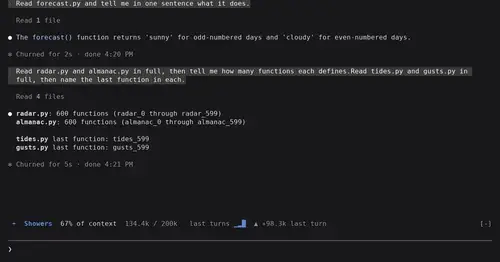
Context window fill as a weather forecast above the prompt, with a chart of recent turns.
Popular Claude Mods
The whole directory →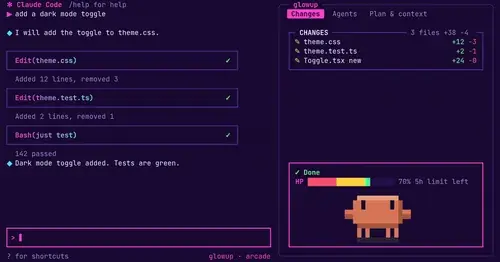
glowup
A live side pane for changes, subagents and context, shareable themes and a pixel pet.
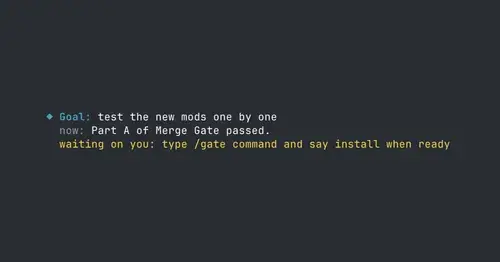
where-am-i
Goal, what Claude is doing now, what waits on you and the next step, above the prompt.
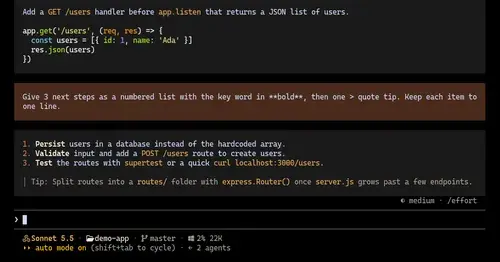
ui-themes
Padded, coloured prompt and reply boxes, themed markdown and a matching status line.
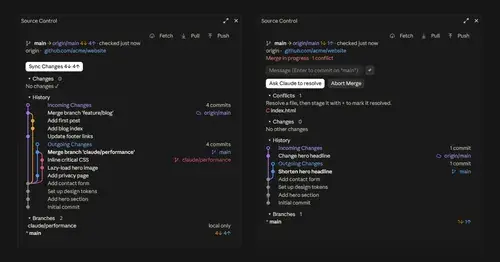
source-control
Git status above the prompt and a VS Code-style panel to commit, sync and resolve.