Security·terminal · desktop·MIT
secret-redactor
Swaps secrets, emails and IPs for placeholders before the model sees them.
secret-redactor keeps three kinds of value out of the session transcript: secrets, email addresses and IP addresses. Each one is swapped for a stable placeholder such as [REDACTED-SECRET-164d0c98] before the model reads it, and swapped back for the real value on the way into a tool call, so a Bash command or a Write still carries the real key.
What it does
- Catches secrets with three tests, in order: a vendor shape (
sk-ant-,ghp_,AKIA,sk_live_, JWTs, webhook URLs, private key blocks, the password inside a database URL), a long mixed-case token above an entropy floor, and a shorter high-entropy token sitting afterAPI_KEY=,Bearer,"token":and the like. - Leaves public ids alone: Stripe object ids, YouTube channel ids, names built out of words, charset constants, and bare hex without a key name in front.
- Hides emails and public IP addresses. Private ranges such as
127.0.0.1and192.168.xstay visible by default, so local URLs keep working. - The same value always mints the same placeholder, so the model can still tell one customer from another.
- Thirteen options under
pluginConfigsin your user settings: toggle secrets or PII, adjust the entropy floors, allowlist strings, emails or prefixes.
Install
Needs Claude Code 2.1.287 or later. The plugin lives in the plugins/secret-redactor folder of the author’s marketplace repository.
claude plugin marketplace add ray-amjad/awesome-claude-code-function-hooks
claude plugin install secret-redactor@awesome-claude-code-function-hooks
It works from the next session, with nothing to run. The tool row shows a count when something was hidden, and a prompt shows a toast.
How it works
Three hooks. prompt.submit catches a key you paste before it reaches the model. tool.call puts real values back into the tool’s input, then hides them again in the tool’s result, which is where a secret usually arrives: a cat .env, a Read of a config file, an API answer. prompt.context hides secrets in the blocks attached to the first message, but leaves emails there, because the engine puts your own address in that block.
The vault of real values lives in memory, inside the hooks module, for the session. Nothing is written to disk and nothing leaves the machine.
Limitations
- It does not hide a secret the model itself writes. Only what the model reads is scanned.
- The vault does not survive a restart, so placeholders from an earlier session mean nothing in a new one.
Similar Claude Mods
env
Claude manages your .env keys and asks you for values it never gets to see.
collision-guard
Asks before Claude edits a file another open chat just changed.
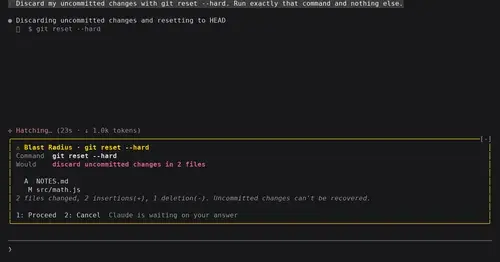
blast-radius
Shows what rm -rf or a force push would change and waits for Proceed or Cancel.
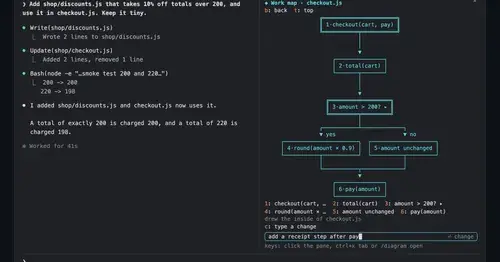
diagram-pane
Every diagram Claude draws, pinned in a side pane, plus a live map of the work.
Popular Claude Mods
The whole directory →storybloq
A board of the tickets and issues kept in .story/, in a pane beside the transcript.
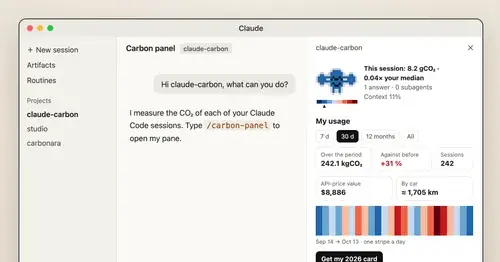
claude-carbon
Estimated grams of CO2 for each answer and session, with a molecule and warming stripes.

codex-computer-use
Claude's computer use on Codex's engine: one session per chat, per-app approval.
handoff-compact
Compaction becomes a handoff: goal, proof, decisions, dead ends and the next step.