While you wait·terminal·MIT
nibbl
A pixel pet above the prompt that eats the bugs your failed tool calls leave.
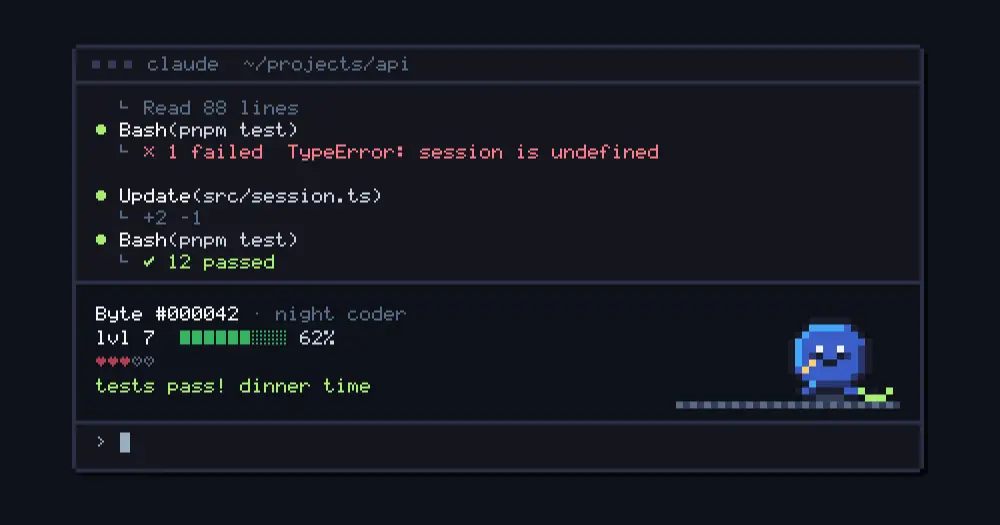
nibbl puts a small pixel pet above the Claude Code prompt that reacts to what Claude does. When a tool call fails, a bug lands in its scene. When a test, lint or build command passes, the pet eats the bugs. It starts as an egg, hatches after ten answered turns and levels up as you work. It never calls the model, so it costs zero tokens, but it does sync with the author’s server.
The animation is the author’s mockup. In version 0.1.0 the status line reads “oops, a bug” and “yum, bugs eaten” instead.
What it does
- Bugs. Any tool call in the main session that ends in an error drops a bug into the scene, up to three, and makes the pet sad for six seconds. Calls you deny and calls made by subagents don’t count.
- Feeding. A Bash command that succeeds and contains
test,vitest,jest,pytest,tsc,lintorbuildclears every bug and makes the pet happy. A successfulgit commitputs a parcel next to it for six seconds. - Expeditions. While Claude works on a turn, the pet walks out of the scene and the status line times its absence. When Claude answers, it walks back with loot.
- Moods. It shows a heart when you pet it, falls asleep after three minutes without activity and wears a nightcap between 2 and 5 a.m. local time. It never dies.
- Petting. Click the heart button on the band, focus the band with
ctrl+xtaband pressp, or run/nibbl pet. Petting earns XP up to five times an hour; the row of hearts shows how many are left. - Growth. Answered turns, passing checks, commits and pets earn XP, each with an hourly cap. Errors earn nothing. In version 0.1.0 the pet grows twice, at level 10 and level 25; its colors and features are fixed at hatch.
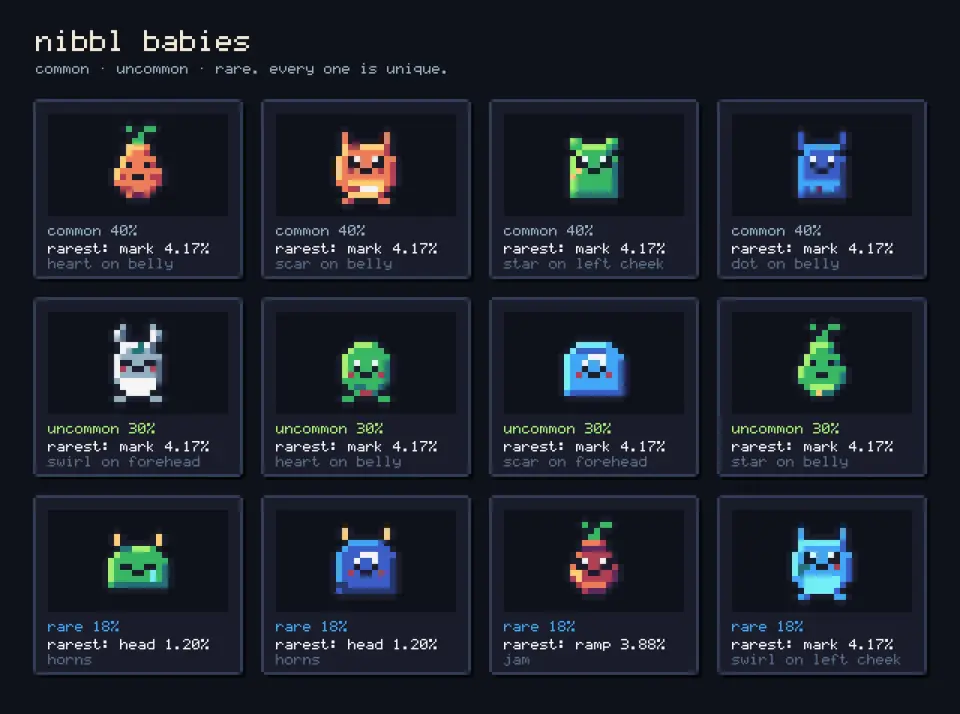
- Rarity. At hatch the server rolls a tier: common 40%, uncommon 30%, rare 18%, epic 9% or legendary 3%, plus a 4% shiny chance. Higher tiers unlock rarer colors, patterns, eyes and ears, and every pet gets one of 24 marks, each with 4.17% odds. One roll per machine, no reroll.
The /nibbl command handles the rest:
/nibblshows level, XP, hearts left, the rarest trait, links to the pet’s public card and leaderboard rank, and how many events wait to sync./nibbl name <text>renames it, once a week and up to 16 characters./nibbl label <text>sets a label of up to 24 characters;/nibbl labelalone clears it./nibbl oddslists the odds of each of its traits./nibbl exportshows a secret code that moves the pet;/nibbl import <code>on the other machine takes it, and the old machine gets a fresh egg. The code is drawn on screen but never written into the command’s output text./nibbl hidehides or shows the band. A hidden pet keeps counting and syncing.
Install
Needs Claude Code 2.1.287 or later, an interactive terminal and a connection to getnibbl.pages.dev: the egg hatches on the author’s server.
claude plugin marketplace add nuromirzak/nibbl
claude plugin install nibbl@nibbl
The README adds the marketplace from the author’s site instead (https://getnibbl.pages.dev/marketplace.json); the commands above use the copy in the repository. An egg appears above the prompt and cracks as you work. When it hatches, a notice shows its serial number, tier and rarest trait.
How it works
The scene is drawn with half-block characters and redrawn every half second, without the model. On each tool.call it waits for the tool to finish, then reads whether it failed and, for Bash, the command text, which it only matches against the check words and git commit. It reads no prompts, files or tool output.
It talks to https://getnibbl.pages.dev:
- Hatch. It sends a machine hash: a SHA-256 of your machine’s ID salted with “nibbl”, or of a random ID if none is found. It gets the ID from
ioregon macOS,/etc/machine-idon Linux or theMachineGuidregistry value viareg queryon Windows. The server answers with the pet’s serial, a secret token and its rolled traits. The hash is what ties one pet to one machine. - Sync. Each event is queued on your machine as a type and a timestamp only: turn, passing check, commit, error, pet or hide. The queue goes to the server with the serial and token at hatch, every 150 minutes while events are pending (sooner past 500), and at session end, waiting up to 2.5 seconds. The server answers with the official XP and level.
- Account. Renames, labels and imports are also server calls.
No code, commands, prompts or file names leave your machine. What the server learns is when you work, and how often your tool calls fail and your checks pass. Every hatched pet gets a public card page and a place on the leaderboard. The server address can be changed with the NIBBL_API environment variable or the plugin’s apiBase setting (HTTPS, or http://localhost for testing).
It also runs date +%z once per session to learn your time zone, for the nightcap. Everything else lives in Claude Code’s plugin store on your machine: the pet record with its token, the egg’s turn count, the hide setting, the cached machine hash and a queue of up to 1,000 unsent events per session. When the server can’t be reached, retries back off from one minute to an hour.
Limitations
- The egg can’t hatch offline. Until it hatches, nothing but the hatch request is sent.
- Checks are a word match on the Bash command: anything containing
buildortestcounts, and a test runner started any other way doesn’t. - The full scene needs a band at least 8 rows tall and 60 columns wide. Smaller, or on any surface other than the terminal, the code falls back to one line with the name, level, hearts and status. The author documents only the terminal; the Desktop app’s Code tab is untested.
Similar Claude Mods
claude-who
Live presence and token leaderboards for a private group of friends, via your own relay.
pixelband
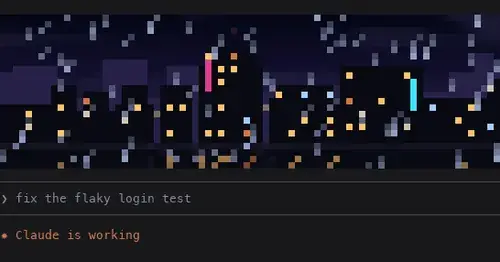
Pixel art above the prompt that reacts to Claude: seven scenes, or your own image or GIF.

claude-pets
A pixel pet in a pane that reacts to your session and levels up as you work.
mindful-claude
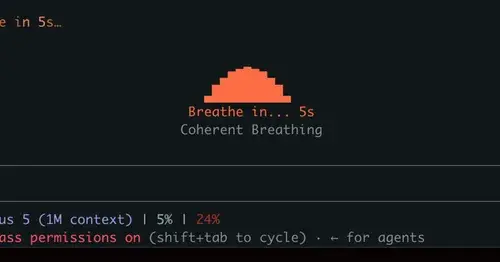
Guided breathing above the prompt while Claude works. Four techniques, zero tokens.
Popular Claude Mods
The whole directory →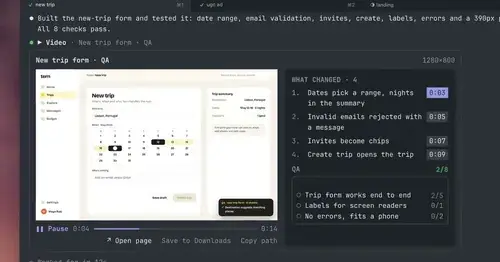
show-your-work
Claude shows screenshots and recorded Playwright runs in the chat, with before/after QA.
paste-view
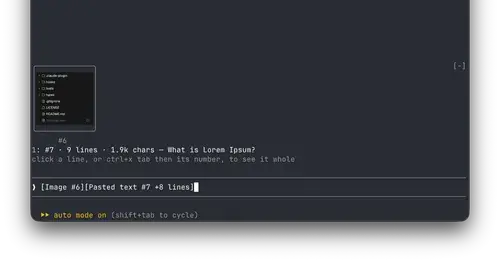
Previews of pasted text and thumbnails of pasted images, drawn above the prompt.
Agent Time Machine
Every tool call on a branching timeline with snapshots: inspect, restore, branch, rerun.
roer-ui
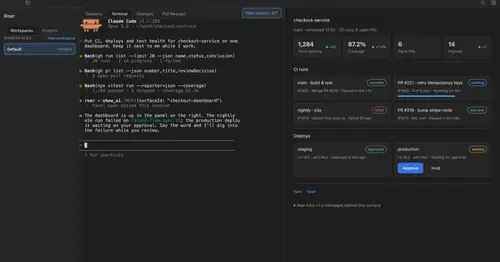
Claude draws forms, dashboards, tables and diffs you can click, in a pane. From JetBrains.