While you wait·terminal·MIT
claude-toons
Cartoons of Clawd under the spinner that change with what Claude is doing.
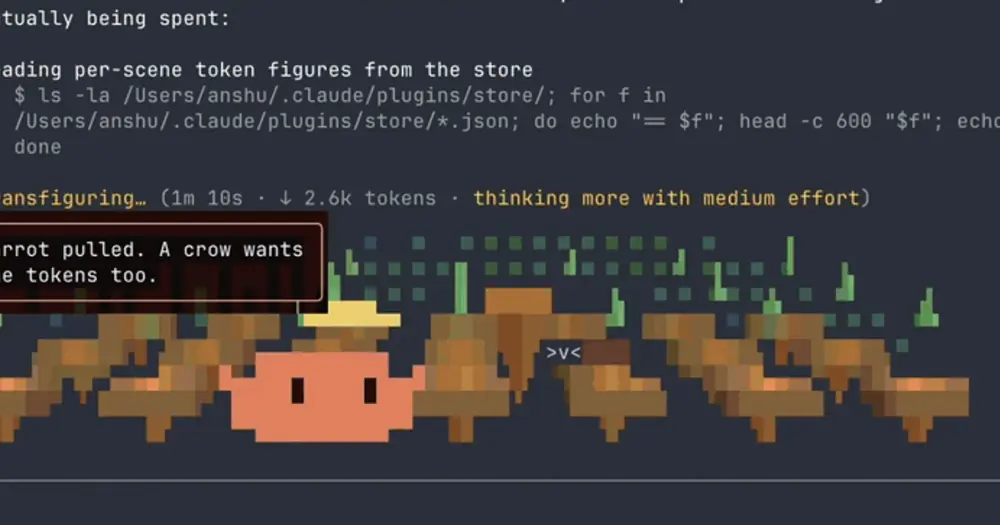
claude-toons draws a small animated cartoon under the Claude Code spinner while Claude works. Clawd, the Claude Code mascot, is in every scene, and the scene follows the work: a test run can play out as a castle siege, a bug hunt as a safari. Most scenes come from 138 ready-made ones that cost nothing; by default a model also draws fresh scenes for news, which the author puts at about 1 to 3% on top of what Claude Code already uses.
What it does
- Scenes that follow the work. The mod sorts what Claude is doing into eleven phases (thinking, searching, reading, editing, testing, building, running a command, git, web, subagents and writing the reply) and plays a scene for the current one. Ready-made scenes write the name of the file or command Claude last touched on a prop.
- Fresh scenes for news. When you send a prompt or a tool call fails or is denied, a model draws a scene for that moment, at most once a minute. Each fresh scene is set in a world dealt from a list of 50 (deep sea, wild west, cooking show, vegetable garden and so on), and Clawd can say a line about the real file, test or error in a speech bubble.
- Three styles. Scenes are drawn in 3D, pixel art or text art. The default mix picks 3D about half the time; you can keep one style or everything but 3D.
/toonsshows or hides the cartoons, even mid-task, and/toons onand/toons offset it directly. The choice survives restarts./toons settingsopens a pane with every setting and the cost figures; the same settings are in/configunder Toons.
The Scenes setting decides where scenes come from:
- Ready-made only: no requests and no tokens.
- Mix (default): ready-made scenes, plus fresh ones for news.
- Fresh only: every scene drawn new, as often as the New scene setting allows (as fast as possible, every 15 seconds by default, every 30 seconds or every minute).
Install
Needs Claude Code 2.1.287 or later, git and an interactive terminal. The repository has no marketplace, so you clone it and point Claude Code at the folder:
git clone https://github.com/achimala/claude-toons ~/src/claude-toons
claude --plugin-dir ~/src/claude-toons
The plugin loads as toons. Give Claude a task and the cartoons appear under the spinner. To load it in every session, the author adds the folder’s full path to CLAUDE_CODE_PLUGIN_DIRS in the env block of ~/.claude/settings.json and restarts Claude Code:
{
  "env": {
    "CLAUDE_CODE_PLUGIN_DIRS": "/Users/you/src/claude-toons"
  }
}
git pull in the folder updates it, and a running session picks up the change. To remove it, take the folder out of CLAUDE_CODE_PLUGIN_DIRS and delete it.
How it works
The mod keeps a running log of the turn. prompt.submit adds the first 400 characters of your prompt as the task. tool.call adds each tool’s name with its main arguments (command, file path, search pattern, path, URL, query, description, subagent type), each cut to 100 characters, and how it ended: done, denied, or failed with the first 120 characters of the error. The spinner adds when Claude turns to thinking or to writing its reply. The log decides the phase, and the phase decides which ready-made scene is dealt. A ready-made scene stays at least 20 seconds, then gives way when the phase changes or after a minute.
A fresh scene is a request to https://api.anthropic.com/v1/messages made with your Claude Code session’s own login (session.authorize) and nothing else. It carries the log since the last scene, so your prompt, commands, file paths and error snippets go to Anthropic’s API. The director model is Sonnet 5.5 by default; Haiku 4.5 is cheaper and Opus 5.5 more inventive. Thinking is off unless you turn on Director thinks, though Opus always thinks. Each session is one cached conversation, trimmed when it grows long. The reply is a scene: sprites, particles, a background effect and sometimes a short drawing program, which the mod runs in its own interpreter with only drawing calls and a time limit per frame. If your login refuses the requests, the mod shows a notice and stops asking for the rest of the session.
What it costs, by the author’s figures: a fresh scene is about 2 to 4 cents at API prices. Mix adds about 1 to 3% to what Claude Code uses, nearer 1% on long tasks and nearer 3% on quick back-and-forth. Fresh only adds about 5 to 10% at one scene every 15 seconds and 15 to 25% as fast as possible. These assume Claude Code itself runs on Opus; on a cheaper model the share is larger. On a subscription the requests count toward your plan’s usage limits; on an API key they are billed to that key. Nothing is spent while Claude is idle or the cartoons are hidden. After about ten minutes of Claude working, /toons settings shows the measured cost per hour next to Claude’s own, the cost per scene, each director model at your pace, your plan’s 5-hour and weekly usage, and this session’s scenes.
The strip is 9 rows tall, rises into view under the spinner and repaints about 20 times a second. In the plugin store the mod keeps whether the cartoons are shown and its cost figures. Settings changed from the pane are written to Claude Code’s config, as /config would.
Limitations
- Terminal only: the strip draws only in the terminal, and only while Claude is working.
- No marketplace yet: you install from a clone and update with
git pull. - Version 0.1.0, from a repository created on 2 October 2026.
Similar Claude Mods
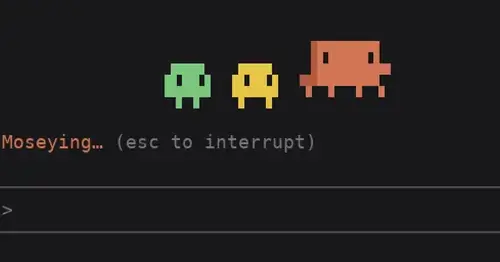
clawd-actor
Clawd acts out the spinner's -ing word above the prompt while Claude works.
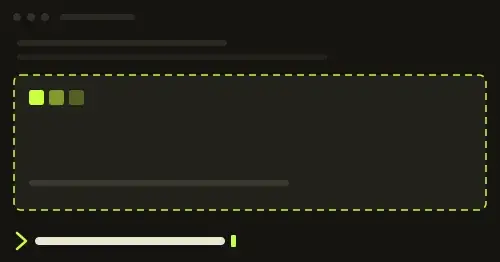
clawd-madenci
A pixel Clawd mines, builds and blows up TNT above the prompt while Claude works.
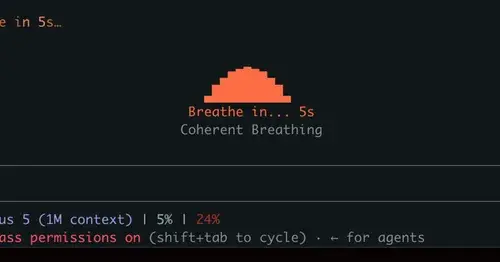
mindful-claude
Guided breathing above the prompt while Claude works. Four techniques, zero tokens.
firstmate-calm
Hides tool rows and swaps the spinner for a sailboat. Toggle with /calm, zero tokens.
Popular Claude Mods
The whole directory →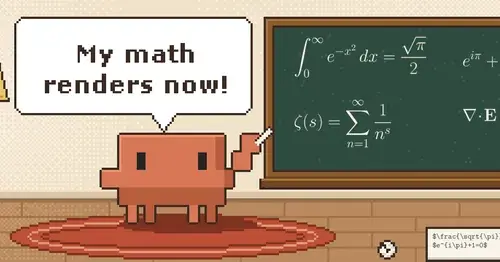
claude-latex
TeX math, TikZ diagrams and LaTeX blocks typeset in Claude's replies, in the desktop app.
TextFold
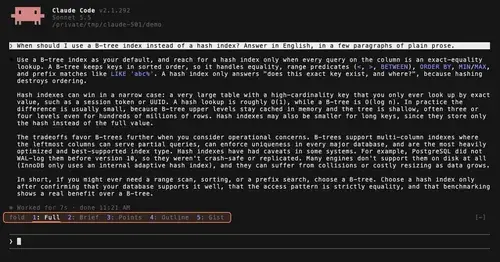
Every reply at five levels, from every word to the answer in one sentence. One key each.
console-status
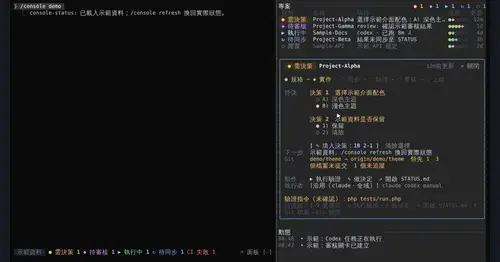
Every project in one pane: decisions, Git, CI, usage and dispatch to Claude or Codex.
next-steps
Up to six suggested next steps after each reply. Tick some and Haiku writes the prompt.